


Shopify customer lifetime value is not built from one purchase.
Getting a customer to buy once is hard. You pay for traffic, run campaigns, build trust, optimize your product pages, try to remove every possible reason for shoppers to leave before checkout.
But one order does not make a customer truly valuable.
The real value starts when that customer comes back again. When they buy again. When they spend more over time. When they choose your brand without needing another ad, another discount, or another reminder from a crowded inbox.
That is where customer lifetime value comes in.
For Shopify stores, customer lifetime value is not just a metric. It is a sign of how strong your relationship with your customers really is. Shopify defines customer lifetime value as the value a customer brings across their full relationship with a business, commonly calculated through average order value, purchase frequency, and average customer lifespan.
A mobile app for your Shopify store helps increase customer lifetime value because it gives your brand a better way to stay connected after the first visit or first purchase.
Instead of waiting for customers to see another ad, open an email, click an SMS, or remember your website, your app gives them a direct path back to your brand.
A mobile website is often where customers discover you. A mobile app is where they keep coming back.
What Customer Lifetime Value Actually Means for a Shopify Store
Customer lifetime value, or CLTV, simply means how much a customer is worth to your store over time.
For Shopify merchants, CLTV usually grows when customers:
Buy more often.
Spend more per order.
Come back without needing another paid ad.
Stay loyal for longer.
Respond to your offers, launches, and campaigns.
Build a habit of shopping from your brand.
So when we say mobile apps can increase CLTV, we are not saying an app magically makes every customer more valuable.
We are saying something more practical:
A mobile app can help turn a one-time buyer into a repeat customer.
And that is where real ecommerce growth starts.
Because for most Shopify brands, the biggest opportunity is not only getting more first-time buyers. It is getting more value from the customers they already worked hard to acquire.
Mobile Apps Help You Get More Value From Customers You Already Paid to Acquire
Most Shopify stores already spend money to get customers.
That might come from Meta ads, Google ads, influencers, SEO, email list building, SMS campaigns, affiliate marketing, or social media content.
That is normal.
The problem starts when every repeat visit also depends on paid channels.
If someone visits your store once, buys once, and disappears, your acquisition cost has only worked for one transaction. But if that same customer comes back three, four, or five times, the value of that original acquisition grows.
This is where a mobile app becomes powerful.
Once customers install your app, you have a direct channel to bring them back. You can reach them with push notifications, app-exclusive offers, product launches, back-in-stock alerts, loyalty reminders, personalized campaigns, and seasonal promotions.
That means your acquisition cost works harder.
You are not only paying to get one order. You are creating a channel that helps bring that customer back again and again.
Some mobile commerce comparisons show app users generating significantly higher value than mobile web users, with one benchmark showing customer lifetime value at $85 for app users compared to $30 for mobile web users.
The exact number will always depend on your brand, product category, retention strategy, and customer behavior.
But the logic is clear.
When customers return more often, spend more over time, and cost less to re-engage, CLTV grows.
Push Notifications Bring Customers Back Without Adding More Ad Spend
A lot of customers do not come back because they forgot about you.
Not because they dislike your brand, or they are not interested, or your products are not good enough.
They just get busy. They get distracted. They see another brand. They close the tab. They move on.
A mobile app gives you a way to remind them at the right time.
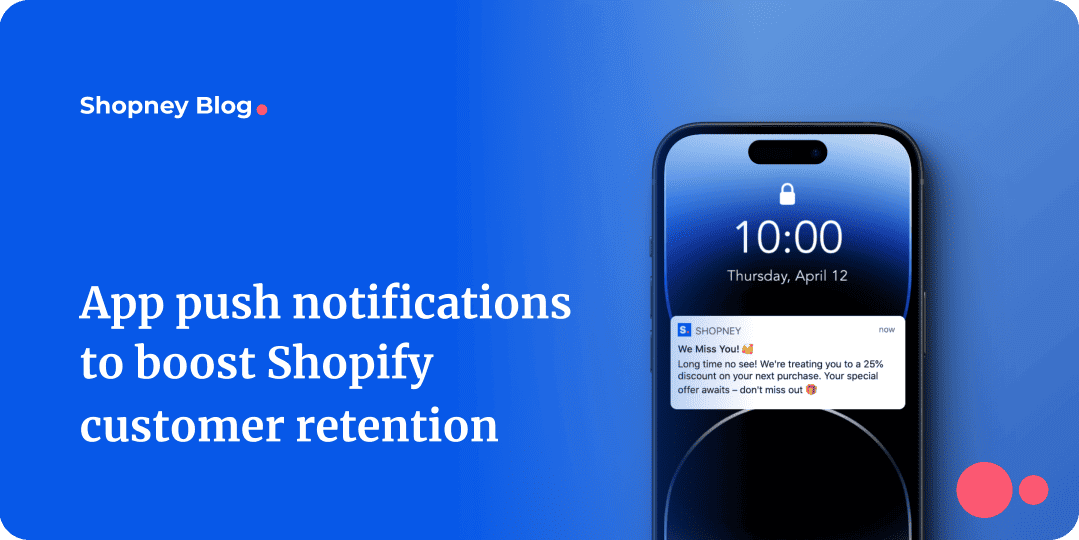
You can send push notifications for new arrivals, limited-time offers, back-in-stock products, price drops, abandoned carts, loyalty rewards, app-only campaigns, seasonal collections, subscription reminders, and reorder prompts.
But the real value is not just “sending notifications.â€
The real value is creating more return sessions.
Every return session gives the customer another chance to browse, discover, add to cart, redeem a reward, or complete a purchase.
That is how purchase frequency grows.
And purchase frequency is one of the main drivers of customer lifetime value.
Emails can be missed. SMS can become expensive. Ads require more budget every time you want to bring shoppers back.
Push notifications give Shopify brands a direct, fast, and cost-effective way to stay present with customers who already showed interest by installing the app.
Mobile Apps Make Repeat Purchases Easier
Repeat customers should not have to start from zero every time they shop.
On the mobile web, the journey can still feel like work.
A customer may need to open their browser, search for your store, wait for pages to load, log in again, find the product, compare options, and move through the whole shopping journey again.
In a mobile app, the experience can feel much more direct.
Customers can return to products they viewed before, items they added to favorites, personalized collections, app-exclusive campaigns, loyalty rewards, their account, past orders, subscription options, and products they are likely to buy again.
That matters because friction kills repeat purchases.
The more effort customers need to make, the easier it becomes for them to delay the purchase or forget it completely.
A mobile app reduces that effort.
It gives customers a faster way back to the products, offers, and experiences they already care about.
This is one of the simplest reasons apps can increase CLTV.
They make buying again easier.
Mobile Apps Give Customers More Reasons to Return
A customer will not keep opening an app just because it exists.
They need a reason.
That reason can be early access to a new collection. It can be an app-only discount. It can be loyalty points. It can be personalized product recommendations. It can be a back-in-stock alert, a new drop, an exclusive bundle, a subscription perk, a VIP campaign, useful content, or faster access to products they already love.
This is where mobile apps become more than another storefront.
They become a repeat shopping channel.
Your website is often designed to convert the visitor at that moment.
Your app can be designed to keep the relationship active over time.
That difference matters.
Because CLTV does not grow from one interaction. It grows from repeated interactions that keep customers connected to your brand.
The more useful your app feels, the more often customers have a reason to return.
And the more often customers return, the more opportunities you have to convert them again.
Mobile Apps Help Increase Average Order Value
Customer lifetime value does not only grow when customers buy more often.
It also grows when customers spend more per order.
That is why average order value matters.
A mobile app can support higher AOV by showing customers more relevant products while they are already engaged.
This can happen through personalized recommendations, upsells, cross-sells, bundles, subscription offers, app-exclusive products, loyalty incentives, and smart in-app campaigns.
The advantage is that app users are usually warmer than random website visitors.
They already know your brand.
They have already shown interest.
They may have already purchased it before.
That makes it easier to guide them toward the next relevant product.
For example, a beauty brand can recommend a matching serum after a customer views a moisturizer. A fashion brand can suggest accessories that complete an outfit. A food and beverage brand can offer a bundle or subscription for products customers buy regularly.
These small moments can increase order value without making the shopping experience feel pushy.
When recommendations are relevant, they feel helpful.
And when customers spend more per order over time, CLTV increases.
Mobile Apps Make Loyalty Programs Harder to Ignore
Many Shopify brands already have loyalty programs.
But the problem is that customers often forget about them.
They may not remember how many points they have. They may not know what they can redeem. They may miss reward emails. They may not think about loyalty when they are shopping.
A mobile app can make loyalty much more visible.
Customers can see points, rewards, VIP perks, and app-exclusive benefits while they are already browsing.
You can also remind them with push notifications when they have points to use, rewards about to expire, or exclusive benefits waiting for them.
This makes loyalty part of the shopping experience instead of something hidden in the background.
That is important because loyalty programs only work when customers notice them, understand them, and use them.
Inside a mobile app, loyalty becomes easier to see and easier to act on.
And when customers feel rewarded for coming back, they have one more reason to buy again.
Mobile Apps Turn Engagement Into a Shopping Habit
Engagement is useful only when it leads somewhere.
App opens, clicks, product views, favorites, and campaign visits matter because they create more chances for customers to discover products and buy.
The goal is to build a simple habit loop:
A customer gets a reason to return → They open the app → They see something relevant →They take action → Then they get another reason to come back.
For example, a customer receives a push notification about a new collection → They open the app → They browse the products → They add one item to their favorites → Later, they receive a reminder or offer → They come back and purchase.
That is how engagement turns into repeat buying behavior.
Over time, the app starts to feel like the natural place to shop from that brand.
And that is the point.
A strong mobile app does not only create one more sales channel. It helps create a repeat behavior pattern.
Engagement brings customers back.
A smooth shopping experience helps them convert.
A good reason to return keeps the cycle going.
That is how retention becomes stronger.
And stronger retention is one of the clearest paths to higher customer lifetime value.
When Does a Mobile App Actually Help CLTV?
A mobile app is not magic.
It works best when your store already has signs of repeat purchase potential.
A mobile app can be especially valuable if most of your traffic comes from mobile, you already have returning customers, your products are bought more than once, you launch new products or collections often, you have an active social audience, you use loyalty or subscriptions, you already invest in email or SMS, customers recognize your brand, and you have enough products for people to browse and discover.
In other words, an app works best when customers already have a reason to come back.
The app simply makes that return easier, faster, and more valuable.
This is why timing matters.
If a store has no traffic, no returning customers, no repeat-purchase behavior, and no audience, launching an app may be too early.
But if a Shopify store already has mobile traffic, repeat buyers, loyal customers, social engagement, or retention systems in place, a mobile app can become a strong next step.
It gives the brand a direct channel to grow the relationship after the first purchase.
How to Know If Your Mobile App Is Increasing CLTV
Downloads alone do not prove that your app is improving customer lifetime value.
A download is only the beginning.
The real question is what customers do after installing the app.
Useful metrics include repeat purchase rate from app users, app user average order value, app session frequency, app retention rate, subscription purchases or renewals from the app, revenue per app user, and app customer CLTV compared to mobile web customers.
The key question is simple:
Are app customers coming back more often, buying more often, or spending more over time?
If the answer is yes, your app is not just another sales channel.
It is contributing to higher customer lifetime value.
And when you can compare app users against mobile web users, the value becomes even clearer.
You can see whether app customers are more engaged, more loyal, and more profitable over time.
The Simple CLTV Loop of a Mobile App
Here is the simplest way to understand how mobile apps increase customer lifetime value.
First, a customer discovers your brand.
They visit your Shopify store, usually on mobile.
Then they buy or show interest.
Now they know your brand and may be open to coming back.
Then they install your app.
At that point, you have a direct channel to reach them.
You bring them back with push notifications, app campaigns, loyalty reminders, product drops, and exclusive offers.
They shop in a smoother experience.
They find products faster, see relevant offers, and complete purchases more easily.
Then they come back again.
The more useful and rewarding the app feels, the more likely they are to repeat that behavior.
That is when their lifetime value grows.
They buy more often. They stay longer. They spend more. They cost less to re-engage.
That is the real value of a mobile app for Shopify stores.
How Shopney Helps Shopify Stores Increase Customer Lifetime Value
Shopney helps Shopify brands turn their store into a mobile app that supports repeat purchases, stronger engagement, and higher customer lifetime value.
With Shopney, you can bring customers back through push notifications, guide them with in-app campaigns, highlight app-exclusive offers, support loyalty and subscription experiences, and create a smoother mobile shopping journey.
That means your app can help you do more than attract one-time buyers.
It can help you keep customers engaged after the first purchase, give them more reasons to return, and make every app session more valuable.
For Shopify brands, this is where the real value of a mobile app starts.
It is about creating a direct, branded mobile channel that helps customers come back, shop more easily, and build a stronger relationship with your brand over time.
Final Thoughts
Mobile apps create higher customer lifetime value because they help brands continue the relationship after the first visit or purchase.
They give customers more reasons to come back.
They make repeat shopping easier.
They help brands reach customers directly.
They make loyalty, personalization, upsells, cross-sells, subscriptions, and app-exclusive offers more visible.
Most importantly, they help Shopify brands get more value from the customers they already worked hard to acquire.
A mobile website is often where customers discover your brand.
A mobile app is where they can keep coming back.
That is why, when the timing is right, a mobile app can become one of the strongest channels for increasing customer lifetime value.
Because CLTV does not grow from one visit.
It grows from every return, every repeat purchase, every stronger relationship, and every moment that makes customers choose your brand again.

Share this: